 111
111 2
2 3
3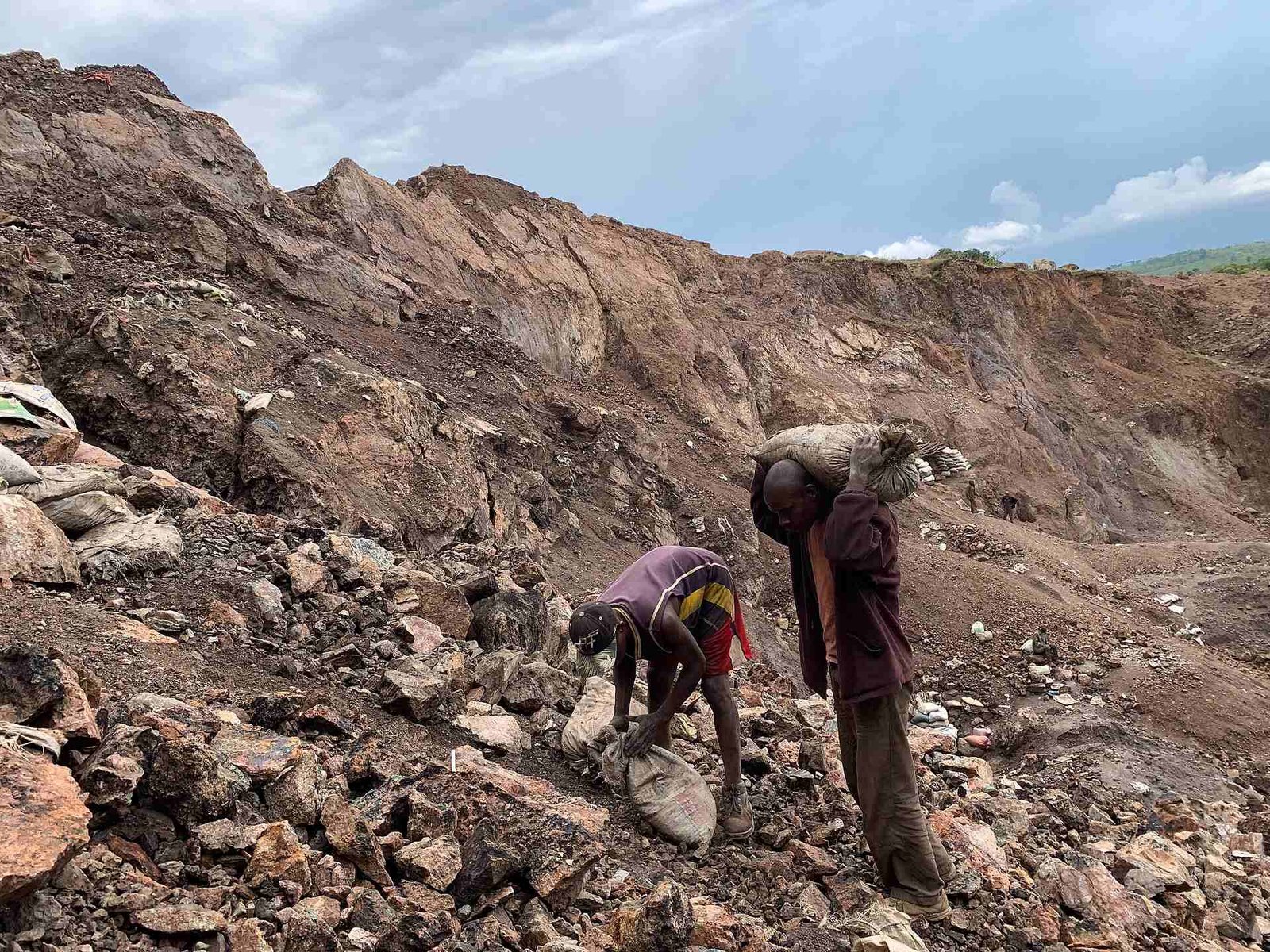
The International Institute for Environment and Development / Wikimedia Commons, CC BY 2.5
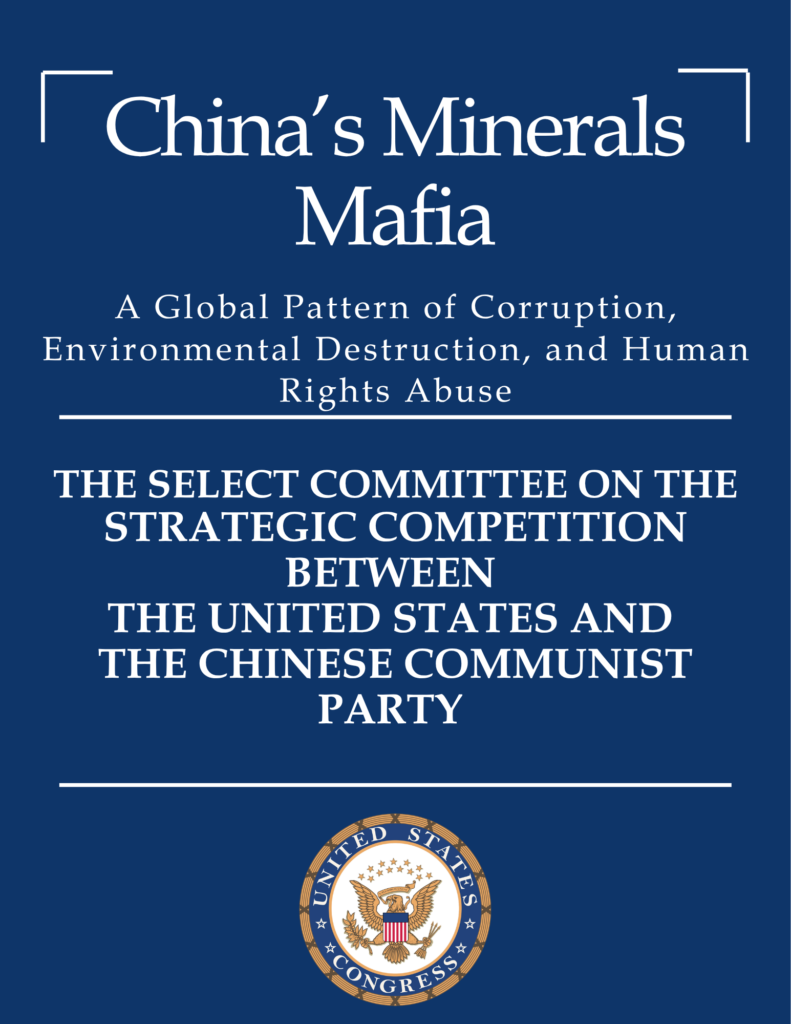
The U.S. House Select Committee on the Strategic Competition Between the United States and the Chinese Communist Party recently released an investigative report titled China’s Minerals Mafia: A Global Pattern of Corruption, Environmental Destruction, and Human Rights Abuses. The report accuses several Chinese mining companies of environmental pollution, labor exploitation, forced community relocations, commercial coercion and corruption in overseas critical mineral projects. It says these cases are not isolated incidents, but part of a “systemic pattern” formed during China’s expansion across global critical mineral supply chains.
From an ESG perspective, the report highlights a practical concern: as lithium, cobalt, nickel, copper and rare earths become foundational resources for new energy, energy storage, electric vehicles and advanced manufacturing, ESG risks in mineral supply chains are becoming increasingly amplified.
The report focuses on 14 cases, among which the most prominent is the tailings dam accident at the Sino-Metals Leach Zambia copper mine in Zambia. According to the committee, on February 18, 2025, a tailings dam at the company’s site in Chambishi collapsed, releasing large volumes of acidic and toxic mining waste into local river systems and affecting the Kafue River basin. The U.S. report says the incident temporarily left about 700,000 residents of Kitwe without access to clean water, damaged farmland and caused mass fish deaths. It also cites an environmental assessment by Drizit Zambia stating that the actual volume of leaked waste was far higher than the company’s initial estimate, and that large amounts of tailings containing pollutants such as cyanide, arsenic, copper, zinc, lead, chromium and cadmium may continue to pose risks to soil and groundwater.
From the “E” in ESG, such incidents expose not a single pollution problem, but systemic risks in tailings dam safety, water resource protection, pollution monitoring, accident disclosure and ecological restoration. Mining is inherently a high-environmental-risk industry. Once a tailings dam fails, the impact is often long-term and cross-regional. Water pollution is especially sensitive because it can affect drinking water safety, agricultural irrigation, fishery resources and public health at the same time. For investors and downstream customers, this means environmental risk does not stop at the mine site, but can be transmitted along supply chains to the battery, automotive, electronics and clean energy industries.
Controversies over social responsibility are also prominent. In the section on lithium mining in Zimbabwe, the report alleges that Chinese companies have engaged in “unchecked mining” practices, including underreporting exports, inadequate labor safety protections, water source pollution, groundwater depletion, dust pollution, forced relocation and the absence of effective grievance mechanisms. The report specifically mentions allegations that Bikita Minerals discharged toxic waste into Matezva Dam, affecting water used by residents, crops and livestock. It also says the Sabi Star project involved the relocation of families during expansion, as well as disputes over the relocation of graves.
These issues relate directly to the“S” in ESG: the relationship between companies and employees, communities and Indigenous peoples. For resource-rich countries, mineral development should bring jobs, tax revenue, infrastructure and industrial upgrading. But if projects are accompanied by forced relocation, inadequate compensation, water conflicts, dust pollution and labor safety incidents, mining investment can easily turn from an economic opportunity into a source of social tension. Especially in developing countries with weaker regulatory capacity and limited community voice, whether companies establish transparent communication mechanisms, grievance channels and compensation systems often determines whether a project can secure a long-term “social license to operate.”
Governance is where the report’s criticism is most concentrated. The committee argues that some Chinese mining companies have used weak host-country regulation, corrupt environments and opaque contracts to expand control over resources, while lowering environmental, labor and human rights standards to reduce costs. The report also accuses Sino-Metals of attempting to suppress an environmental assessment after the Zambia accident. It says some compensation agreements were not fully explained in local languages and required victims not to speak publicly about the incident or pursue further claims.
From the “G” in ESG, governance risks include insufficient information disclosure, opaque environmental assessments, unclear responsibility among related parties, non-transparent compensation mechanisms, complex political-business relationships and a lack of supply chain due diligence. For mining companies, governance failures often magnify environmental and social problems. If environmental data cannot be disclosed in a timely manner, communities cannot file effective grievances and regulators lack independence, pollution incidents are more likely to evolve into crises of trust and legal risk.
It is worth noting that this report is not only an ESG document, but also a U.S. congressional report with a strategic purpose. In its conclusions, the committee links these cases to U.S. concerns over critical mineral supply chains, arguing that if Chinese companies reduce costs through lower environmental and labor standards, they will weaken the competitiveness of U.S. and other Western companies. The report therefore recommends that the United States offer resource-rich countries alternative critical mineral partnerships, continue building supply chains not dominated by China, and consider sanctions and visa restrictions against Chinese government and mining company personnel involved in corruption and serious human rights abuses. This means ESG is becoming a geopolitical tool in the competition over critical minerals. On one hand, the United States is criticizing Chinese companies over environmental, human rights and governance issues; on the other, it is also seeking to use these concerns to encourage resource-rich countries to accept mineral cooperation models led by the United States or its allies.
For Chinese mining companies, the warning from this report is that overseas mining projects can no longer be judged only by resource access, capacity expansion and cost advantages. In the future, whether companies can sustain overseas operations will increasingly depend on environmental compliance, community relations, transparent disclosure, labor protection and anti-corruption mechanisms. For downstream new energy companies and international investors, scrutiny cannot stop at first-tier suppliers. They will need to trace mineral sources more deeply, assess project governance, examine community impacts and clarify responsibility for environmental remediation.
Overall, the U.S. report pushes controversies around Chinese overseas mining to the intersection of ESG and supply chain security. Regardless of its political position, the issues raised in the report point to a broader trend: competition over critical minerals has shifted from “who can secure resources” to “who can obtain resources in a more transparent, compliant and sustainable way.” As the new energy transition accelerates, the ESG performance of mineral supply chains is becoming part of corporate reputation, market access and national industrial competitiveness.