
 111
111 2
2 3
3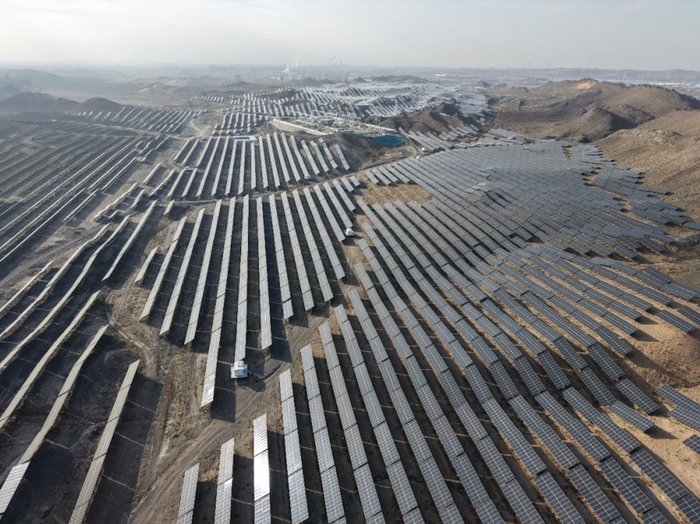
China has launched its first large-scale “computing-power coordination” green electricity supply project, marking a significant step in integrating renewable energy directly with data center infrastructure.
The project, located in Zhongwei, Ningxia, began operation on May 2 with a 500 MW solar power station supplying green electricity to the Zhongwei Cloud Base data center cluster. It is part of China Datang’s broader 2 GW renewable energy project, which also includes 1.5 GW of wind power scheduled for full grid connection in September 2026.
The development is closely tied to China’s “Eastern Data, Western Computing” strategy, a national initiative designed to move energy-intensive computing workloads to western regions with abundant renewable resources. Zhongwei is one of China’s national computing network hub nodes and has strong renewable energy conditions, with new energy accounting for more than 60% of local installed power capacity and a utilization rate of about 94%.
Unlike traditional green power procurement models, the Zhongwei project introduces a dual-track supply mechanism combining physical direct supply and bilateral power trading. For incremental data center loads, dedicated transmission lines allow solar electricity to be delivered directly to server rooms without detouring through the wider grid. Energy storage facilities are used to absorb surplus solar generation, while wind power is expected to complement solar output during non-solar hours.
This structure is designed to provide data centers with cleaner, cheaper and more stable electricity, while also improving local renewable energy consumption and reducing grid pressure.
According to official information, the first phase of the project involves total investment of RMB 8.7 billion and will be able to meet 2.29 billion kWh of annual electricity demand from the Zhongwei Cloud Base after full operation. As of the end of April 2026, six of China’s top ten computing power companies had already entered the Zhongwei computing park, where the actual share of green electricity consumption has exceeded 90%.
The project also reflects a broader challenge facing the technology sector: the rapid growth of AI and cloud computing is pushing electricity demand higher, even as governments and companies seek to reduce emissions. By linking renewable generation, storage and computing loads more directly, the Zhongwei model offers a potential pathway for balancing digital infrastructure expansion with decarbonization goals.
For China, the project carries both environmental and industrial significance. It supports the country’s dual-carbon targets of peaking carbon emissions before 2030 and achieving carbon neutrality before 2060, while also strengthening the role of western renewable-rich regions in the digital economy.
If successful, the Zhongwei model could become a reference point for future low-carbon data center development, especially in regions where wind and solar resources are abundant but local power demand has historically been limited. As AI-driven computing demand accelerates globally, the ability to match data workloads with renewable energy availability may become an increasingly important part of sustainable digital infrastructure planning.